


How Cloud Automation Is Transforming Modern Businesses
Businesses today operate in increasingly fast-moving digital environments where efficiency, scalability, and operational responsiveness are critical for long-term success. Traditional manual processes that once supported business operations are rapidly becoming inefficient as organizations handle larger volumes of data, distributed teams, cloud systems, and continuously evolving customer demands.
Cloud automation has emerged as one of the most important technological advancements driving modern business transformation. By automating infrastructure management, workflows, deployment pipelines, reporting systems, and operational processes, organizations can significantly improve efficiency while reducing manual complexity and operational overhead.
The Rise of Cloud-Based Operations
Modern organizations are increasingly shifting away from isolated on-premise systems toward cloud-native environments that support flexibility, scalability, and centralized operations. Cloud infrastructure allows businesses to deploy systems faster, scale resources dynamically, and maintain operational continuity across multiple departments and geographic locations.
However, as cloud ecosystems grow more complex, manual infrastructure management becomes increasingly difficult. Organizations often manage multiple applications, databases, integrations, APIs, storage systems, and operational workflows simultaneously. Without automation, maintaining these systems efficiently becomes time-consuming and operationally expensive.
What Cloud Automation Actually Means
Cloud automation refers to the use of software-driven processes to manage, configure, monitor, deploy, and optimize digital infrastructure without constant manual intervention. Instead of relying on repetitive administrative tasks, businesses create automated workflows that allow systems to respond dynamically to operational requirements.
This may include automated server provisioning, deployment pipelines, infrastructure scaling, security monitoring, backup management, reporting generation, workflow execution, system synchronization, and performance optimization. These capabilities help organizations reduce operational delays while improving consistency and reliability across digital systems.
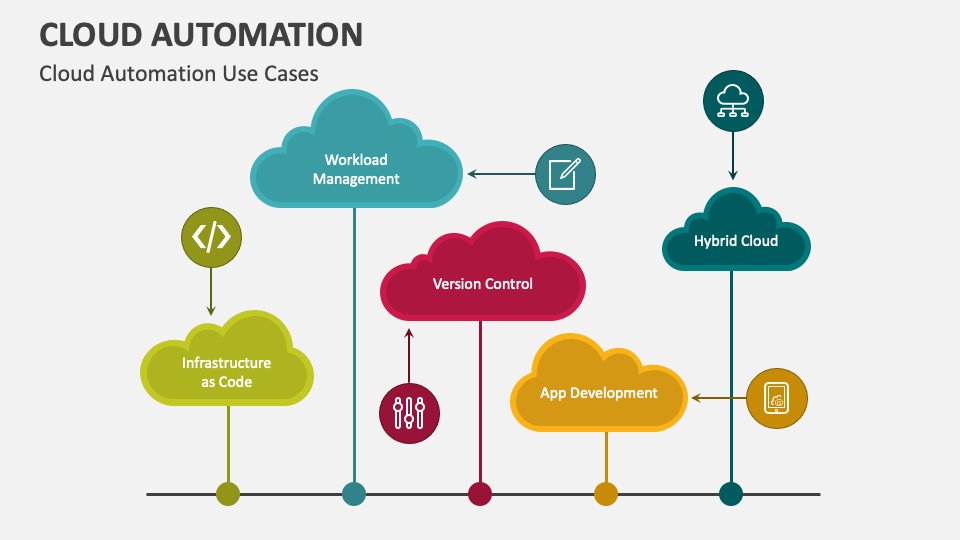
Improving Operational Efficiency
One of the most significant advantages of cloud automation is its ability to improve operational efficiency across multiple business departments, systems, and digital workflows simultaneously. Many organizations continue to rely on repetitive manual processes for infrastructure management, reporting, deployment, approvals, communication synchronization, and operational monitoring, which often leads to delays, inconsistencies, and unnecessary resource consumption. Cloud automation helps eliminate these inefficiencies by introducing structured workflows that automatically execute recurring operational tasks with greater speed, consistency, and accuracy. Instead of depending heavily on continuous human intervention, businesses can build automated operational pipelines that support system management, process execution, and infrastructure coordination in real time. This significantly reduces operational bottlenecks while improving productivity, response times, reporting quality, and overall workflow stability throughout the organization.
Automation also enables internal teams to shift their focus away from repetitive technical maintenance and administrative handling toward higher-value strategic activities that directly contribute to business growth and operational improvement. By minimizing manual intervention, organizations reduce the likelihood of human error, improve process consistency, strengthen infrastructure reliability, and maintain more predictable operational performance across departments and digital systems. Automated environments further support faster execution of business operations, streamlined data synchronization, improved communication between platforms, and more efficient management of enterprise applications and cloud services. As businesses continue scaling their digital operations, automation becomes essential for maintaining long-term efficiency without proportionally increasing operational complexity, infrastructure management overhead, or administrative workload across the company.
Scalability & Infrastructure Flexibility
Scalability has become one of the most critical requirements for modern digital infrastructure as organizations increasingly operate through cloud-based systems, distributed teams, enterprise applications, SaaS platforms, and continuously expanding operational environments. As businesses grow, infrastructure demands fluctuate significantly across customer activity, database operations, application performance, integrations, cloud resources, and operational workloads. Traditional infrastructure models often struggle to adapt quickly to these changing demands, resulting in performance limitations, resource inefficiencies, and operational instability during periods of increased activity. Automated cloud infrastructure solves this challenge by allowing systems to scale dynamically according to real-time operational requirements without requiring continuous manual configuration or technical intervention.
Infrastructure flexibility also allows organizations to deploy, modify, expand, and optimize systems far more efficiently than traditional static environments. Automated scaling mechanisms can intelligently allocate computing resources, storage capacity, application performance layers, and network distribution based on operational usage patterns and workload conditions. This enables businesses to maintain stable system performance while supporting larger user volumes, increased operational activity, and evolving digital requirements. Flexible cloud environments additionally improve cost optimization by ensuring infrastructure resources are utilized efficiently instead of remaining permanently overallocated. As digital ecosystems continue expanding, scalable automation provides organizations with the adaptability necessary to maintain operational continuity, infrastructure stability, and long-term technological growth across rapidly changing business environments.
Security & Infrastructure Monitoring
Security management has become increasingly important as businesses rely more heavily on digital operations, cloud environments, enterprise applications, remote accessibility, and interconnected infrastructure systems to support day-to-day business activities. Modern organizations manage large volumes of operational data, customer information, communication systems, internal workflows, integrations, and cloud resources that require continuous monitoring and protection against security threats, unauthorized access, and infrastructure vulnerabilities. Automated monitoring systems help organizations maintain stronger operational visibility by detecting unusual activity, system anomalies, performance disruptions, access irregularities, infrastructure failures, and potential security risks in real time. This proactive monitoring approach allows businesses to identify and respond to operational threats more efficiently before they escalate into larger infrastructure issues.
Automation also strengthens infrastructure reliability by supporting continuous monitoring processes, scheduled backups, deployment validation procedures, controlled access management, infrastructure auditing, and security update automation across cloud systems and enterprise environments. These automated security operations help maintain consistent protection standards while reducing dependency on manual oversight and repetitive administrative monitoring tasks. Organizations can improve system stability, operational resilience, and business continuity by ensuring that infrastructure components are continuously observed, updated, and managed according to structured operational protocols. As businesses continue expanding their digital ecosystems, intelligent security automation becomes a foundational component of maintaining reliable, scalable, and secure enterprise infrastructure capable of supporting long-term operational growth and evolving technological requirements.
The Future of Intelligent Infrastructure
The future of enterprise technology will increasingly depend on intelligent infrastructure systems capable of self-monitoring, automated optimization, predictive maintenance, and AI-assisted operational management. Businesses are moving toward ecosystems where cloud platforms, automation engines, and enterprise applications operate together as unified digital environments.
Organizations that invest early in scalable automation systems will gain significant advantages in operational efficiency, system reliability, and digital adaptability. Automation is no longer viewed as an optional enhancement — it is becoming a foundational component of modern enterprise infrastructure.
Conclusion
Cloud automation is fundamentally transforming the way modern businesses manage infrastructure, operational workflows, digital systems, and enterprise technology environments across rapidly evolving industries. As organizations continue expanding their digital operations, the ability to automate infrastructure management, system monitoring, deployment processes, reporting, integrations, and operational workflows has become essential for maintaining long-term efficiency and scalability. Businesses that rely heavily on manual operational models often struggle with increasing complexity, slower response times, inconsistent processes, and growing infrastructure management challenges. Intelligent cloud automation helps eliminate these limitations by creating more adaptive, responsive, and scalable operational ecosystems capable of supporting continuous business growth and digital transformation initiatives.
At ilineTechnology, the focus is centered on building scalable cloud systems, enterprise automation solutions, modern SaaS platforms, and reliable digital infrastructure designed to support long-term operational performance and organizational scalability. The objective is not simply to develop software systems, but to create structured technology environments that improve operational stability, infrastructure flexibility, workflow efficiency, and digital reliability for modern businesses. As enterprise technology continues evolving toward intelligent infrastructure and automated operational ecosystems, organizations that invest in scalable cloud architecture and structured automation systems will be better positioned to adapt, innovate, and maintain sustainable growth in increasingly competitive digital markets.
Leave a Reply